Alaska's assisted living costs top the nation at $7,200+ monthly, and you'll face long waitlists. Learn the 5 critical things every family must know before choosing a care community.
Key Takeaways
- •Alaska has the nation's highest assisted living costs at $7,200+ monthly, driven by remote location and extreme climate.
- •Severe capacity shortages create long waitlists; apply early to Alaska Pioneer Homes and AHFC housing for affordable options.
- •Alaska uses five care levels, from minimal ADL help to comprehensive support for significant health and cognitive impairments.
- •Over 60% of Alaska's assisted living residents have dementia, requiring specialized memory care averaging $8,149 monthly.
- •Medicaid waivers, Veterans' Aid and Attendance, and state programs provide financial assistance for eligible low-income seniors.
Alaska Has the Highest Assisted Living Costs in the Nation—Plan for $7,200+
Several factors drive these elevated costs. Alaska's remote location inflates food, medical supply, and construction material expenses. High labor costs reflect workforce shortages and competitive wages needed to attract staff. Extreme climate conditions increase heating, maintenance, and utility bills, while climate-resilient building requirements raise construction costs. State regulations around staffing, safety, and emergency preparedness add further operational expenses.
Despite these high costs, assisted living remains Alaska's most affordable institutional care option—significantly less expensive than nursing homes at roughly $31,000 monthly. With occupancy rates nationally at 83.2%, demand for assisted living continues to remain strong across the country. When evaluating assisted living costs, families should compare their current housing and utility expenses to understand the full value proposition of community living.

Waitlists Are Long and Growing—Apply Early to State Pioneer Homes and AHFC Housing
High costs aren't the only barrier families face when seeking Alaska assisted living—severe capacity shortages mean long waitlists for the state's most affordable options. AHFC's 610 senior/disabled housing units haven't increased since 2021, yet their waitlist jumped 55% to 1,923 applicants by 2024. Alaska Pioneer Homes maintain just 506 licensed beds statewide, with active waitlists growing from 186 in 2018 to 356 by 2024.
Fairbanks illustrates the crisis: one 90-bed facility operates with 31 people waiting, while only 12 open beds exist across other local homes. High-acuity residents occupying existing beds slow turnover notably. Nationally, individuals on Medicaid home- and community-based services waiting lists face an average wait time of 40 months, with those requiring services for intellectual or developmental disabilities waiting even longer at 50 months.
Alaska's Alaskans Living Independently Waiver has limited enrollment and may have a waitlist when spots are full, making early application critical for those seeking community-based care alternatives. Apply to Pioneer Homes and AHFC housing as early as possible—before your loved one needs immediate placement—to secure affordable care when the time comes.
Most Residents Need Level III or IV Care—Understand the Five Service Tiers Before You Choose
Before you tour facilities or compare monthly rates, you need to grasp Alaska's five-tier care model—because most assisted living residents require Level III or IV support, not the basic services advertised in entry-level pricing.
Level I covers minimal ADL help and primarily housekeeping or meal assistance. Level II provides regular hands-on support with one or two ADLs plus medication reminders. Level III delivers moderate to extensive daily help with multiple ADLs—transfers, toileting, dressing—requiring frequent staff intervention. Level IV offers intensive support with nearly all ADLs, close health monitoring, and coordination with external providers. Level V provides comprehensive personal care for seniors with significant health issues or cognitive impairments, including specialized support for conditions like dementia or Alzheimer's.
Understanding these tiers helps you budget accurately and choose communities equipped to serve your loved one's actual needs, not just their current state. A senior living calculator can estimate the costs of different care levels versus staying at home, allowing you to input monthly expenses for personalized estimates based on your specific situation.
Memory Care Is Critical—More Than 60% of Residents Live With Dementia
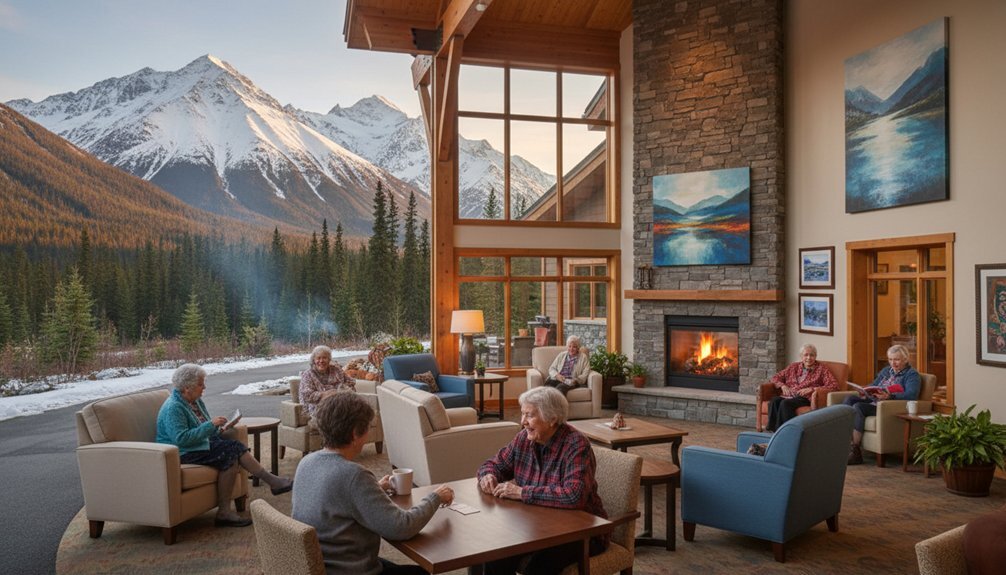
Choosing the right service tier matters even more when you recognize that dementia affects the majority of Alaska's assisted living population. About 60% of Pioneer Home residents live with some form of dementia—significantly higher than the national average of 42%. As Alaska's 85+ population quadruples by 2050, one in three will likely experience Alzheimer's or related dementias.
Your loved one with dementia needs more than standard assisted living. Progressive memory loss, impaired judgment, wandering risk, and behavior changes require specialized training and secure environments. Most residents need help with bathing, walking, dressing, and toileting—tasks that become increasingly difficult as dementia advances.
Staff trained in dementia-specific communication and smaller staff-to-resident ratios aren't luxuries; they're essential for safety and dignity. With Alaska's smallest care workforce of just 596 staff members statewide, finding facilities with adequate staffing becomes even more critical for families seeking quality memory care. Memory care in Alaska averages $8,149 monthly, significantly more than the $6,768 monthly cost of standard assisted living.
Financial Assistance Options Exist—Explore Medicaid Waivers, Veterans Benefits, and State Grant Programs
Alaska's assisted living costs can strain any family budget, but you don't have to pay the full price alone. Several programs can help your loved one afford quality care.
Medicaid waivers like ALI and APDD cover assisted living for eligible adults, though income must stay below $2,829/month and assets under $2,000. The Alaska Community Living Program provides ongoing financial assistance while allowing residents to keep $100 monthly for personal needs. This program specifically targets adults discharging from Alaska Psychiatric Institute, Adult Mental Health Residential facilities, or the Department of Corrections who need protective oversight.
Veterans who served during wartime may qualify for Aid and Attendance benefits, which increase their pension when they need help with daily activities. Adult Public Assistance offers monthly cash support for low-income seniors and disabled adults.
Don't overlook General Relief Assisted Living, which provides temporary state-funded help while you explore long-term solutions. Participants in this program retain $200 monthly as a personal needs allowance while contributing to their care costs based on income.

Explore Forget Me Not
- Assisted living in Anchorage, Alaska — all-inclusive care in a 16-bed boutique home
- Memory care for Alzheimer's and dementia — safe, structured, familiar routines
- Our founder's story — why we built a multigenerational home
- Get on the waitlist — ahead of our November 2026 opening
Written by Forget Me Not Team